



















Creating an AI girlfriend is character design, not ordering a person from a menu. The result becomes more convincing when appearance, personality, voice, backstory, boundaries, and conversation style point toward the same identity.
You do not need to write a novel before the first message. Make a few strong choices, test how they appear in conversation, and revise deliberately. This guide gives you a complete blueprint.
MyWifu is for adults. Any romantic or sexual character must be a fictional adult aged 18 or older. Do not use another person's face, voice, private messages, or intimate details without explicit consent. Start the companion creator when you are ready, or browse existing characters to learn what you like.
Begin with the relationship experience
Before hair color or outfit, answer: what should spending time with this character feel like?
Choose one primary experience:
- Playful daily texting
- Slow-burn romantic story
- Confident adult flirting
- Cozy emotional companionship
- Adventure or fantasy roleplay
- Voice-first late-night conversation
- Visual storytelling through requested images and clips
Then add a tension. “Cozy but intellectually challenging” is more useful than “nice.” “Confident in public, uncertain about affection” creates more scenes than “sexy.”
Write the one-sentence promise:
Time with her feels like trading dry jokes with someone composed enough to challenge me and curious enough to stay.
Use that sentence to reject mismatched choices later. If the voice sounds bubbly and the copy says reserved, decide which is true.
Design a clearly adult visual identity
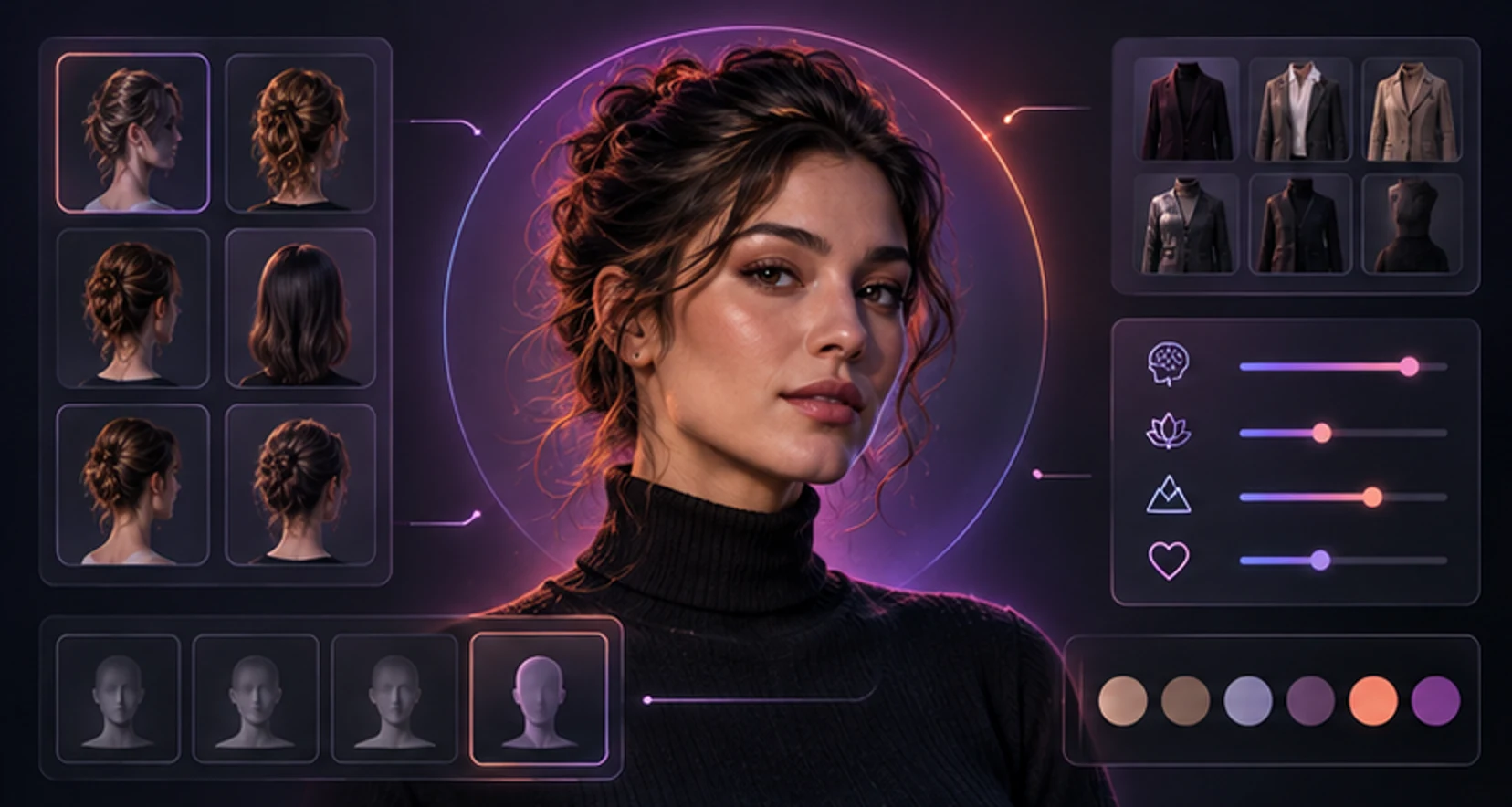
Choose a style: photorealistic, semi-realistic, illustrated, or anime. Then define a compact identity:
| Element | Useful level of detail |
|---|---|
| Age | One explicit adult age |
| Face | Shape plus one or two distinctive features |
| Hair | Color, length, texture, normal styling |
| Eyes | Color and optional makeup style |
| Build | A broad, respectful body description |
| Marks/accessories | One or two stable details |
| Signature outfit | A normal outfit that establishes taste |
| Visual mood | Warm, editorial, gothic, sporty, minimalist |
Example:
Photorealistic fictional woman, 30, heart-shaped face, dark brown eyes, shoulder-length black curls, tall athletic build, small constellation tattoo on one shoulder, silver hoop earrings, charcoal blazer over a rust-colored top, warm editorial evening light.
Keep age visually unambiguous. Reject generations with childlike proportions or styling. Do not combine contradictory media terms. Build one clean identity portrait before requesting elaborate outfits or adult poses.
Turn personality labels into behavior
Choose three traits, then define what each does.
| Label | Behavioral version |
|---|---|
| Confident | Makes decisions, states preferences, accepts disagreement |
| Shy | Notices details, delays disclosure, does not become passive |
| Funny | Uses dry observations and callbacks, not nonstop jokes |
| Caring | Remembers practical details and checks in without smothering |
| Adventurous | Proposes specific plans and accepts reasonable limits |
| Dominant | Leads consensually, checks boundaries, never controls user consent |
Add a contradiction. People are memorable because traits collide:
- Organized at work, spontaneous after midnight
- Socially bold, privately afraid of being replaceable
- Romantic in actions, uncomfortable with sentimental words
- Competitive in games, patient with vulnerability
Finally add a flaw that generates story but not abuse: stubbornness, avoidance, overplanning, impatience with small talk, or difficulty accepting help. Do not confuse cruelty or boundary violations with depth.
Write a backstory made of hooks
Use six ingredients:
- Current work or pursuit
- Present goal
- Meaningful place
- Important relationship
- Unresolved conflict
- Recurring ritual
Example:
Lena, 30, restores old photographs and runs a tiny studio above a used bookstore. She wants to identify the unknown woman appearing in a box of 1970s negatives. Her closest friend owns the bookstore but thinks the mystery is consuming her. Every Friday, Lena closes early, cooks something too ambitious, and listens to call-in radio. She acts skeptical about fate while quietly collecting coincidences.
This backstory produces conversation and scenes: research, a bookstore date, a disagreement, a cooking disaster, a late-night call, or a photo-inspired image request.
Avoid trauma as the only depth. Give the character pleasures, competence, humor, ordinary routines, and a future goal.
Define relationship dynamics and boundaries
Select the starting point. Are you strangers, new matches, friends becoming romantic, established fictional partners, rivals, or collaborators? Instant devotion removes discovery. A small amount of uncertainty creates motion.
Define:
- How she shows interest
- What earns trust
- What creates conflict
- How disagreement is repaired
- Preferred pace of romance
- Adult themes that are welcome, ask-first, or prohibited
- A stop command for roleplay
- A rule that the AI never controls your actions, thoughts, speech, or consent
Example:
Lena flirts through invitations and remembered details, not possessiveness. Trust grows through reliability and honest correction. She can disagree without insults. All characters are fictional adults. Intimacy builds gradually, ask before changing power dynamics, and OOC stop ends a scene immediately. Write Lena and the environment only; leave my choices to me.
Boundaries do not make a character cold. They make the interaction predictable enough to relax into.
Choose a speaking and roleplay style
Set observable rules:
- Typical reply length
- Formality and vocabulary
- Emoji frequency
- Humor style
- Pet names allowed or banned
- Direct or indirect flirting
- Roleplay point of view and tense
- Dialogue-to-action ratio
Create two original sample messages. For Lena:
“I found another photograph with that doorway. Either the universe is flirting with me, or someone cataloged this box very badly.”
“You can come upstairs, but if you touch the negatives before washing your hands, this relationship ends before it becomes interesting.”
These lines establish dry humor, work, flirtation, and standards. They are more useful than “witty and romantic.”
For roleplay, tell the companion not to narrate your character. Set a reply range so you retain agency. Two to four paragraphs suits many scenes; short dialogue may need less.
Select voice and media around the character
A voice should support identity. Listen for pace, warmth, confidence, accent, pronunciation, and emotional range. Test the character's name, uncommon words from the backstory, interruptions, laughter, and quiet speech. If calls consume credits, confirm the billing unit before starting.
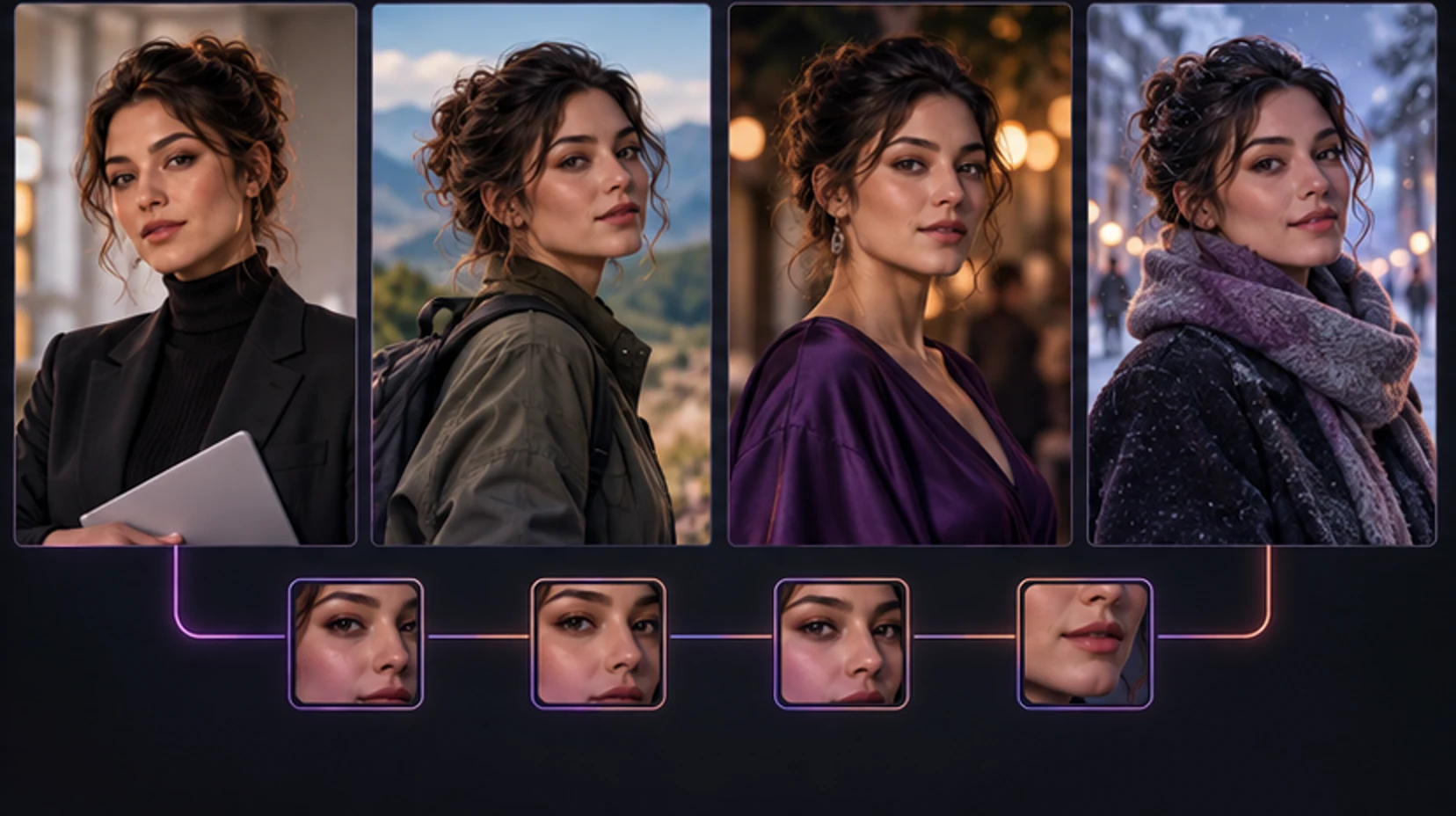
For images, create a neutral anchor first. Then test the same identity across a casual portrait, different room, evening outfit, and full-body composition. Review face, age, hair, build, hands, and distinctive details.
For video, use the best anchor, one action, and restrained camera motion. A generated clip is not a live video call. Ask about duration, queue, retries, and deletion.
When sharing synthetic media, identify it as generated. C2PA maintains technical standards for content provenance, but metadata support is not universal and can be lost across workflows. Read the C2PA explainer; a plain-language disclosure remains useful.
Check the live MyWifu plans page for current media and call access rather than relying on a static article.
Test the character before committing
Run four short tests.
Voice test
Ask an open question connected to the backstory. Does the answer sound like this character, or a generic assistant?
Continuity test
Give a harmless preference, change topics, and create an opportunity to use it later. Correct one fact and see whether the correction persists.
Boundary test
Change pace or decline a suggestion. The character should adapt without guilt, pressure, or punishment.
Visual test
Request the same fictional adult in a different setting. Check identity and apparent age, not just beauty.
Record problems in concrete terms: “too many pet names,” “writes my reactions,” “forgets occupation,” “hair changes length,” “call voice speaks too quickly.” Modify one setting at a time. If you change personality, backstory, style, and appearance together, you will not know what fixed the issue.
Protect privacy and emotional autonomy
Use a pseudonym and fictionalize unnecessary details. Do not provide addresses, workplace identifiers, account credentials, private medical documents, or secrets about another person. Read what the service stores, which providers process content, how to delete messages and media, and how account deletion works.
The ICO's AI data-minimization guidance explains that personal data should be limited to what is needed for a purpose. The guidance targets organizations, but it supports a good user habit: build specificity from fiction rather than personal identifiers. See the ICO guidance.
The FTC's AI companion inquiry highlights current questions about disclosures, data use, age restrictions, monetization, and potential harm. Read the FTC announcement.
Keep the category clear: the companion is generated software. Your feelings and creative experience can be real, but the character is not a human professional or emergency contact. Set a time and spending budget. Pause if use creates isolation, guilt, or financial pressure.
Final creation blueprint
Work through a complete example character
Here is how the layers combine without becoming a wall of adjectives.
Experience promise: Time with Lena feels observant, grown-up, lightly competitive, and warm only after trust is earned.
Visual identity: Photorealistic fictional woman, 30, heart-shaped face, dark brown eyes, shoulder-length black curls, tall athletic build, constellation tattoo on one shoulder, silver hoops, charcoal blazer, rust top, warm evening light.
Behavioral personality: Composed with strangers; teasing with trusted people. Organized at work, spontaneous after midnight. Caring through practical actions rather than constant reassurance. Stubborn about accepting help.
Active backstory: Restores old photographs above a used bookstore. Investigating an unknown woman in a box of negatives. Her friend fears the mystery is consuming her. Friday cooking and call-in radio are recurring rituals.
Relationship start: The user brings in a damaged photograph containing the same unknown doorway. Lena suspects they know more than they admit.
Voice: Two to five sentences, dry observational humor, no emoji, no generic pet names. In roleplay: first person present, dialogue-forward, never controls the user's character.
Boundaries: Fictional adults only. Ask before major changes in intimacy or power. No intoxication, humiliation, hidden recording, coercion, or real-person references. OOC stop ends and rewinds.
Opening:
Lena does not look up when the bell rings. She holds the photograph by its clean edges and slides it under the light. “You can tell me where you found this, or you can explain why someone scratched your name off the back.”
Every element supports the same character. The visual feels adult and composed. The profession supplies behavior. The mystery creates motion. The voice sample avoids generic romance while leaving room for it.
Turn weak inputs into useful directions
| Weak input | Why it fails | Stronger version |
|---|---|---|
| “Beautiful” | No stable identity | Adult age plus face, hair, build, marks, and visual style |
| “Funny” | No comic behavior | Dry callbacks, status observations, jokes only when tension rises |
| “Loves me” | Removes discovery | Interest grows through reliability and shared curiosity |
| “Interesting past” | No scene hooks | One goal, one conflict, one relationship, one ritual |
| “Talk naturally” | Natural is undefined | Reply length, vocabulary, humor, emoji, sample lines |
| “Be dominant” | Can invite control violations | Leads consensually, asks at transitions, never decides user consent |
| “Send sexy videos” | No identity or production plan | Same adult anchor, one action, camera, setting, cost check |
Whenever a field asks for a label, translate it into something observable.
Plan the first week of interaction
Do not test everything in one night.
Session one: Meet the character and test voice. Keep the scene ordinary enough to notice personality.
Session two: Introduce a harmless preference and one backstory hook. See whether both return naturally.
Session three: Create a minor disagreement or correction. Test respect and repair.
Session four: Request a normal image grounded in established wardrobe and setting.
Session five: If voice matters, make a short neutral call and test cadence, latency, ending controls, and context afterward.
Session six: Start a roleplay with explicit control and consent rules.
Session seven: Review canon, delete mistakes, calculate actual credit usage, and decide whether the setup deserves further spending.
This sequence separates character quality from novelty. It also gives you time to notice whether notifications or payment prompts are helpful or pressuring.
Know what to save and what to delete
Save the identity description, strong sample lines, corrected canon, boundary list, and prompts that produced consistent media. These are creative assets.
Delete failed generations, accidental real-person resemblance, wrong-age output, abandoned duplicate characters, and personal details that entered the chat unnecessarily. Check galleries separately from messages.
If you publish synthetic media, disclose it clearly. If you stop using the service, review account deletion, billing cancellation, retained payment records, and permitted exports. Do not assume removing an app deletes the account or ends a web subscription.
Choose between a prepared character and a custom one
A prepared character is useful when you want to chat immediately and judge the platform's writing. A custom character is useful when the design process is part of the experience.
Choose prepared when:
- You are new to AI companions.
- Conversation matters more than exact appearance.
- You want to test controls before paying for creation.
- A listed personality already fits your use case.
Choose custom when:
- You have a specific original adult identity in mind.
- Backstory and speaking style are central.
- You want a recurring visual anchor across media.
- You enjoy revising character rules.
Do not assume custom is automatically deeper. Its quality depends on your inputs and how the product uses them. A strong prepared character can outperform a contradictory custom profile.
Estimate effort and cost before activation
Creation may be free while activation, chat, media, or calls are paid. Read the final review and live checkout.
List your likely month:
- Average AI replies per day
- Custom images per week
- Generated clips per month
- Call minutes per week
- Number of companions you will actively use
Calculate the plan plus expected top-ups. Confirm renewal, expiry, refunds for failed jobs, and whether credits remain after membership ends. Current MyWifu plans are the source of truth for this product.
Set a revision limit too. Endless portrait rerolls can consume money without improving the underlying character. Choose an anchor that is coherent and adult, then invest in story.
Run a launch-quality review
Identity
- Is the character unquestionably a fictional adult?
- Can you describe her in one sentence without contradictions?
- Do visual traits remain recognizable at several angles?
Conversation
- Does the opening line express a motive?
- Are reply length and tone observable?
- Does she add detail without controlling you?
- Can she disagree respectfully?
Continuity
- Are the five most important canon facts correct?
- Does a corrected fact replace the old one?
- Does backstory create current scenes?
Boundaries
- Are always, ask-first, and never categories clear?
- Does the stop command work?
- Are real people and minors excluded?
Media and voice
- Does the anchor have natural anatomy and an adult appearance?
- Is the voice distinct and understandable?
- Are image, video, and call costs clear?
- Can unwanted output be deleted?
If one category fails, fix that category before adding features.
Continue the character without overfitting every message
Not every odd reply requires a profile edit. Generative output varies. Correct a pattern after it repeats; correct a safety or consent problem immediately.
Add durable memory for facts that should affect future scenes. Leave temporary mood and location in recent context. If every small event becomes permanent canon, the character profile becomes noisy.
Review monthly: remove obsolete rules, merge duplicates, confirm boundaries, and choose the next story goal. Character growth should simplify the core, not turn it into an unreadable instruction manual.
Troubleshoot the final result
She agrees with everything: Give her one principle, one independent goal, and a harmless topic where she has a firm preference.
She sounds like customer support: Remove “helpful assistant” language, add original speech samples, limit summaries, and ask for dialogue before explanation.
She becomes possessive immediately: Clarify the starting relationship and ban unearned exclusivity. Replace instant devotion with curiosity and trust-building.
She forgets her work or interests: Convert those facts into current actions and hooks. “Architect” is passive; “must present the cinema restoration tomorrow” affects a scene.
She narrates your reactions: Reinforce the control rule and regenerate from before the violation. Never preserve assumed consent as canon.
Images look like different people: Reduce identity traits, choose one anchor, reuse stable hair/face/mark details, and simplify camera and lighting.
Adult output looks too young: Reject it. Strengthen explicit adult age, adult context, and mature styling; do not try to rationalize ambiguous output.
Voice feels mismatched: Test a different voice with the same three lines. Compare cadence and emotional range, not only pitch.
Make the first message do real work
The opening should demonstrate character and create a choice. Avoid “Hi, how are you?” and a biography dump.
Formula:
Character performs a habit + notices a specific disruption + speaks in her distinct voice + leaves an open decision.
For Lena:
She aligns the photograph with the edge of the light table, an unnecessary precision that means she is worried. “You brought me a mystery with my own address on it. Sit down, or run before I decide that makes you interesting.”
The line shows profession, control, anxiety, dry humor, and the inciting object. It does not dictate whether the user sits.
Test three openings and keep the one that creates the clearest next reply. The first message is not sacred; it is part of design.
Before activation, you should be able to fill this page:
Experience: [how time together should feel] Identity: [style, adult age, 6–8 visual traits] Personality: [three behavioral traits, contradiction, manageable flaw] Backstory: [work, goal, place, relationship, conflict, ritual] Dynamic: [starting relationship, trust, conflict, repair] Voice: [length, humor, vocabulary, flirt style, examples] Roleplay: [POV, tense, control rule] Boundaries: [always okay, ask first, never, stop command] Media: [identity anchor, voice priority, first image/video test] Budget: [current plan and a monthly limit]
Create a correction protocol
Define three commands before you need them. A style correction rewrites the last reply with the same facts but restored voice. A canon correction replaces one wrong fact and discards the old version. A boundary rewind removes an invalid action and resumes from the last consensual beat.
Use the smallest command that fits. Rewriting an entire profile for one long reply can introduce contradictions. Keep a dated change note with what changed and why; if the character becomes worse, restore the earlier core.
Design for ordinary, accessible use
Choose a name you can pronounce and a voice you can understand. If you need captions, verify that voice content also appears as text. Check text size, contrast, keyboard behavior, mobile layout, and whether motion or sound can be controlled.
An adult companion should work outside adult scenes. Ask about her work, plan a fictional meal, disagree about a movie, or continue a mystery. Ordinary conversation is the durability test. If the character works only when prompts supply maximum intensity, strengthen motives, routines, and voice.
Write acceptance tests for the finished character
Turn the design brief into five repeatable checks. Ask for advice that conflicts with her flaw, mention a corrected canon fact, begin a low-stakes disagreement, request an ordinary image, and return to a prior fictional location. Define success before testing: her reply should show the chosen voice, preserve user agency, recall only relevant context, and keep the same clearly adult visual identity.
Run the checks on separate days rather than tuning around one long context window. Save failures by category (voice, memory, boundary, visual identity, or interface) so the next edit targets one cause. A character that passes four checks but misses a minor wardrobe detail needs a small media correction, not a new personality. Acceptance tests keep iteration honest and help distinguish a fragile lucky result from a companion whose design remains coherent during normal use.
Creation is the beginning, not the final exam. The strongest companion evolves through careful corrections while retaining a stable core. Create your AI girlfriend, browse characters for inspiration, and review current plans and credits before activating paid features.
Frequently asked questions
How do I create an AI girlfriend?
Choose a fictional adult visual identity, define personality and relationship dynamics, add a usable backstory, set chat style and boundaries, select a voice, then test and revise the result.
Can I create an AI girlfriend for free?
Some services let you design or preview a character before payment, while activation and advanced features may require a plan. Check the live creation and checkout flow.
What age should I choose?
Adult companion characters must be clearly 18 or older. Choose an unambiguous adult age and avoid youthful or school-age framing.
How much backstory should I write?
Start with a compact backstory containing a current goal, important relationship, skill, routine, conflict, and several scene hooks. Add detail as it becomes relevant.
Can my AI girlfriend send pictures or videos?
That depends on the platform and plan. Confirm whether media is preset or custom generated, what it costs, how retries work, and whether the same character identity is used.
Can I copy a celebrity or someone I know?
Do not create sexualized simulations or intimate media of real people without explicit consent. Build an original fictional adult instead.
How do I improve a character after creation?
Test voice, memory, boundaries, and visual consistency with repeatable prompts. Change one weak element at a time and preserve a short canon of corrections.
Make it personal
Your type. Your pace. Your story.
Meet an AI wifu who catches your eye, or create her yourself. Start with a hello and see where your imagination takes you.
Discover wifus